Product Showcase

Product Showcase

Industries and scenarios where inflatable sealing rings are used

1. Food and pharmaceutical industry (sterilization cabinets, vacuum packaging machines, powder filling and sealing, sterile isolators, airtight doors for cleanrooms, etc.)
2. Vacuum/precision equipment industry (vacuum chambers, vacuum coating machines, vacuum welding chambers, negative pressure chambers, laboratory cleanroom doors, etc.)
3. Chemical industry/energy/metallurgy (pressure vessels, pipeline flanges, dust pipelines, high-temperature furnace doors, desulfurization and denitrification equipment, etc.)
4. Packaging/logistics/warehousing (refrigerated vehicles/cold storage doors, rear doors of trucks, containers, packaging machine airlocks, side seals of conveyor belts, etc.)
5. Aviation/Rail Transit/Special Equipment (aircraft cabin doors, train doors, explosion-proof doors, firefighting equipment, large hatch covers, etc.)
6. Other general industrial products (various large double-door, sliding door, flange port, and irregular-shaped cabinets; powder/particle/liquid conveying pipeline valves; noise isolation rooms, soundproof doors, water treatment equipment, etc.)

Learn more about the product
Special-shaped customized airbag
Special-shaped customized airbag: The special-shaped inflatable sealing ring belongs to non-standard customized sealing products, different from the conventional circular and square standard rubber rings. It is specially processed and customized for various irregular holes, special-shaped cabins, and special equipment structures, without being limited by fixed specifications. Standard sealing parts cannot match the complex concave-convex structures, special arcs, and irregular corners of equipment. The special-shaped inflatable sealing parts can perfectly solve the problem of installation restrictions. The entire product is formed through one-piece vulcanization, without any joint gaps, and has better overall air tightness, without the phenomenon of air leakage or water seepage at the joint.
Silicone flexible connection
Silicone soft connectors are flexible connection components for pipelines, featuring excellent flexibility, soft texture and good sealing performance. Sterile liquid transportation: High-purity liquid/buffer solution/injection water connections between fermentation tanks, mixing tanks, purification systems, and filling lines. Powder/particle transportation: Dust-free and sterile transportation of drug powder/particles between raw material storage, mixers, and tablet presses. Equipment flexible connection: Vibration reduction + sealing + displacement compensation at the inlet and outlet of centrifuges, dryers, and reactors. Clean ventilation/ventilation: Sealed transportation of sterile gas/tail gas in sterile workshops, biosafety cabinets, and fermentation tanks. Sterilization adapter pipelines: Flexible connection for steam sterilization and circulating pipelines. ✅ High-purity cleanliness: Platinum sulfidation, no precipitation, no residue, and no contamination of drugs. ✅ Temperature-resistant sterilization: -60℃ to +200℃, withstands 121℃ high-pressure steam sterilization. ✅ Flexible and easy to install: High elasticity, flexible and bendable, suitable for complex clean workshop layouts. ✅ Transparent visibility: Semi-transparent material, allowing visual monitoring of medium flow and no dead corners.
Dust cover
Dust cover
Dust Cover: The dust cover is also known as an extensible protective sleeve or a corrugated dust cover. It is a rubber protective plastic accessory, mainly made of high-quality rubber raw materials through vulcanization. It comes in various styles such as corrugated folding type, integrated cylindrical type, and closed type. The overall flexibility of the product is excellent, with good expansion and rebound effects, and it is resistant to pulling without cracking. Its main functions are dust prevention, waterproofing, oil and dirt prevention, sand prevention, rust prevention and corrosion prevention. It can isolate external dust and debris, rainwater impurities, avoiding long-term exposure of mechanical components to wear, rust, aging and jamming. The dust cover has excellent resistance to high and low temperatures, aging and friction. It has a large expansion stroke, flexible compression and folding, easy installation, and excellent sealing performance. It can freely expand and swing with the mechanical movement without affecting the normal operation of the equipment. It is widely used in engineering machinery, automotive parts, hydraulic piston rods, connecting rods, transmission shafts, shock absorbers, mechanical equipment connection parts, precision instruments, etc. It effectively reduces part wear, lowers equipment maintenance frequency, and extends the overall service life of mechanical components.
Shield machine suction cup sealing strip
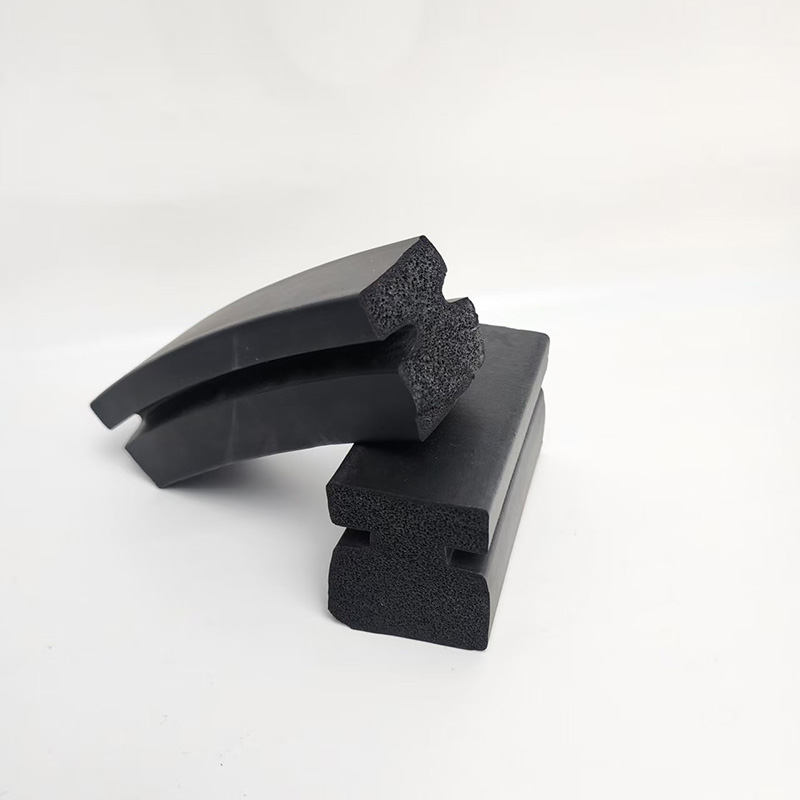
The suction cup sealing strip of the shield machine is a ring-shaped or I-shaped foamed rubber strip installed on the vacuum suction cup surface of the assembly machine. Its function is to closely adhere to the inner arc of the pipe segment, form a sealed cavity, evacuate air to create negative pressure, and firmly hold concrete pipe segments weighing several tons to tens of tons, completing the grasping, transportation and assembly processes.
Related news
The development trend of inflatable sealing rings
2026-09-18

The development trend of inflatable sealing rings

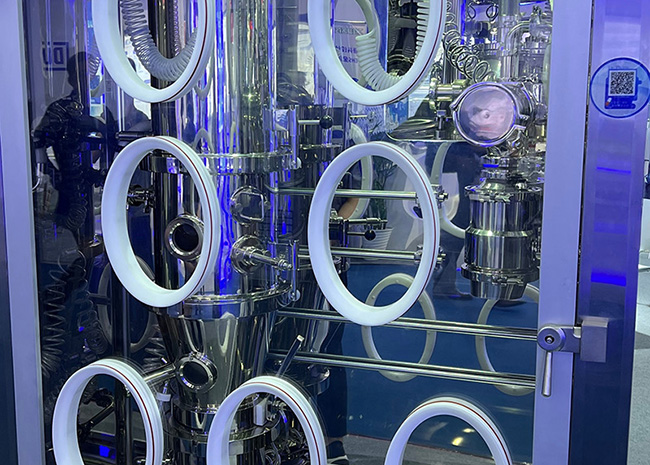
With the continuous upgrading and iteration in various fields such as new energy, pharmaceuticals, semiconductors, and nuclear power equipment, the industrial sealing components industry has ushered in a brand-new development pattern.
Learn more
Frequently Asked Questions
The pressure of the inflatable sealing ring

The normal inflation pressure for the standard type of sealing ring is 1-2 kilograms (0.1-0.2 MPa). Gradually increase the pressure for optimal sealing condition and use it to expand and seal the sealing ring. If you want to withstand greater pressure, through reasonable design and manufacturing, it can also withstand high pressure.

The characteristics of the inflatable sealing ring

1. The sealing gap is large and it has strong adaptability. Ordinary O-rings can only seal very small gaps. The inflatable ring can seal gaps of 0.5 to 5mm or even larger, with low requirements for processing accuracy. 2. It can be actively opened and closed, and is flexible to use. Inflation: Expansion and compression to achieve sealing/holding/blocking Deflation: Rapid contraction and reset, without friction or jamming It is particularly suitable for scenarios with frequent opening and closing and where the workpiece needs to pass through. 3. The sealing surface has good adaptability. It can self-adapt and fit for non-round, elliptical, slight deformation, rough surfaces, and flange misalignment. Ordinary hard seals are difficult to achieve this. 4. The pressure is controllable and the sealing force can be adjusted. The expansion force can be controlled by adjusting the air pressure. It can be used for both light and heavy loads, and it is not likely to damage soft workpieces (plastics, glass, thin-walled parts). 5. There is no friction or wear, and the lifespan is long. It only comes into contact during inflation, and it does not have friction in non-working states. It is much more durable than conventional sealing rings. 6. Installation is simple and the versatility is high. No complex and precise grooves are needed. Simple grooves or steps can be used for installation. It can also be made into square, rectangular, or special-shaped rings.

How to choose an inflatable sealing ring

1. First, let's look at the installation methods: 1. Outer diameter expansion pneumatic sealing ring: After inflation, it expands outward and presses against the outer cylindrical cavity, with the sealing surface on the outside. It is suitable for large gaps and large dimensional tolerances. 2. Inner diameter expansion pneumatic sealing ring: After inflation, it tightens inwardly. It has strong clamping force. 3. End face (axial) expansion pneumatic sealing ring: After inflation, it bulges and expands along the height direction, pressing against the opposite plane to form a seal. 2. Select the material based on the usage environment: 1. Silicone: Use imported silicone material. It is resistant to high and low temperatures, -60℃ to 300℃. 2. Ethylene Propylene Diene Monomer (EPDM): Resistant to acid and alkali corrosion, aging-resistant, ozone-resistant, and heat-resistant. Suitable temperature range: -60 to 130℃, but not resistant to oil-based media. 3. Nitrile Butadiene Rubber (NBR): Good oil resistance, high wear resistance, suitable for environments with oil contamination. Poor in low-temperature resistance and ozone resistance. 4. Fluorine rubber: Resistant to high temperatures, oil, acids and alkalis, corrosion-resistant, all-in-one material. 3. Select the size of the gap: 1. Small gap: Ordinary circular cross-section 2. Large gap, large tolerance: Select rectangular/irregular cross-section, or add a high expansion amount of the outer expansion sealing ring 3. Irregular surface, uneven surface: Select custom-shaped pneumatic sealing ring 4. Select the installation space: 1. Sufficient slot width and depth: Select standard O-type pneumatic sealing ring 2. Narrow space: Select flat, thin pneumatic sealing ring 3. Requires quick disassembly and assembly: Select open type, snap type

Frequently Asked Questions
WeChat