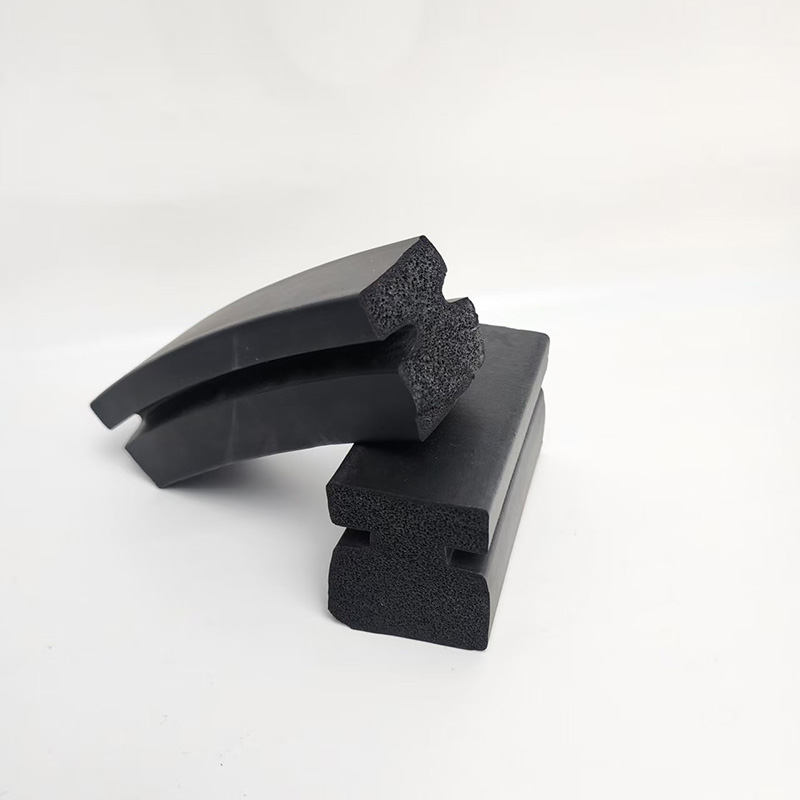
Inner diameter expansion: The inner diameter of the inflatable sealing ring expands when inflated, meaning that after being inflated, the ring expands radially inward, reducing its inner diameter and tightening its grip on the shaft/core body to achieve an inner peripheral seal; after deflation, it rebounds, restoring its inner diameter and loosening its grip, suitable for dynamic/frequent opening and closing scenarios. Principle: Natural state: Loosely embedded in the groove, with a larger inner diameter and no contact with the shaft surface. Inflation: Internal pressure is applied, causing radial expansion inward, resulting in a reduction in inner diameter, and the inner peripheral surface tightly gripping the shaft/core body, forming a uniform sealing band. Deflation: Pressure is released, and the ring elastically rebounds, restoring its inner diameter and detaching from the shaft surface, without frictional resistance. Our advantages: We can adopt our own developed formula for segmented vulcanization process, and throughout the process, there is no need to customize a complete set of molding molds, significantly reducing production costs. There is no need to wait for the mold processing cycle; once an order is received, production can begin immediately, resulting in a faster delivery cycle. We can produce products of any large diameter and unconventional non-standard specifications at will, with specifications not limited by molds. Small batch, multi-model orders can be flexibly produced, and the product versatility is stronger.
Inner diameter expansion: The inner diameter of the inflatable sealing ring expands when inflated, meaning that after being inflated, the ring expands radially inward, reducing its inner diameter and tightening its grip on the shaft/core body to achieve an inner peripheral seal; after deflation, it rebounds, restoring its inner diameter and loosening its grip, suitable for dynamic/frequent opening and closing scenarios. Principle: Natural state: Loosely embedded in the groove, with a larger inner diameter and no contact with the shaft surface. Inflation: Internal pressure is applied, causing radial expansion inward, resulting in a reduction in inner diameter, and the inner peripheral surface tightly gripping the shaft/core body, forming a uniform sealing band. Deflation: Pressure is released, and the ring elastically rebounds, restoring its inner diameter and detaching from the shaft surface, without frictional resistance. Our advantages: We can adopt our own developed formula for segmented vulcanization process, and throughout the process, there is no need to customize a complete set of molding molds, significantly reducing production costs. There is no need to wait for the mold processing cycle; once an order is received, production can begin immediately, resulting in a faster delivery cycle. We can produce products of any large diameter and unconventional non-standard specifications at will, with specifications not limited by molds. Small batch, multi-model orders can be flexibly produced, and the product versatility is stronger.




2026-09-18
The development trend of inflatable sealing rings